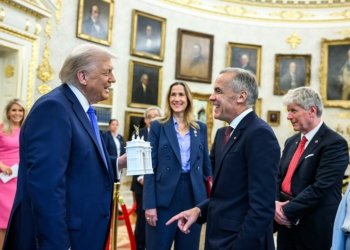

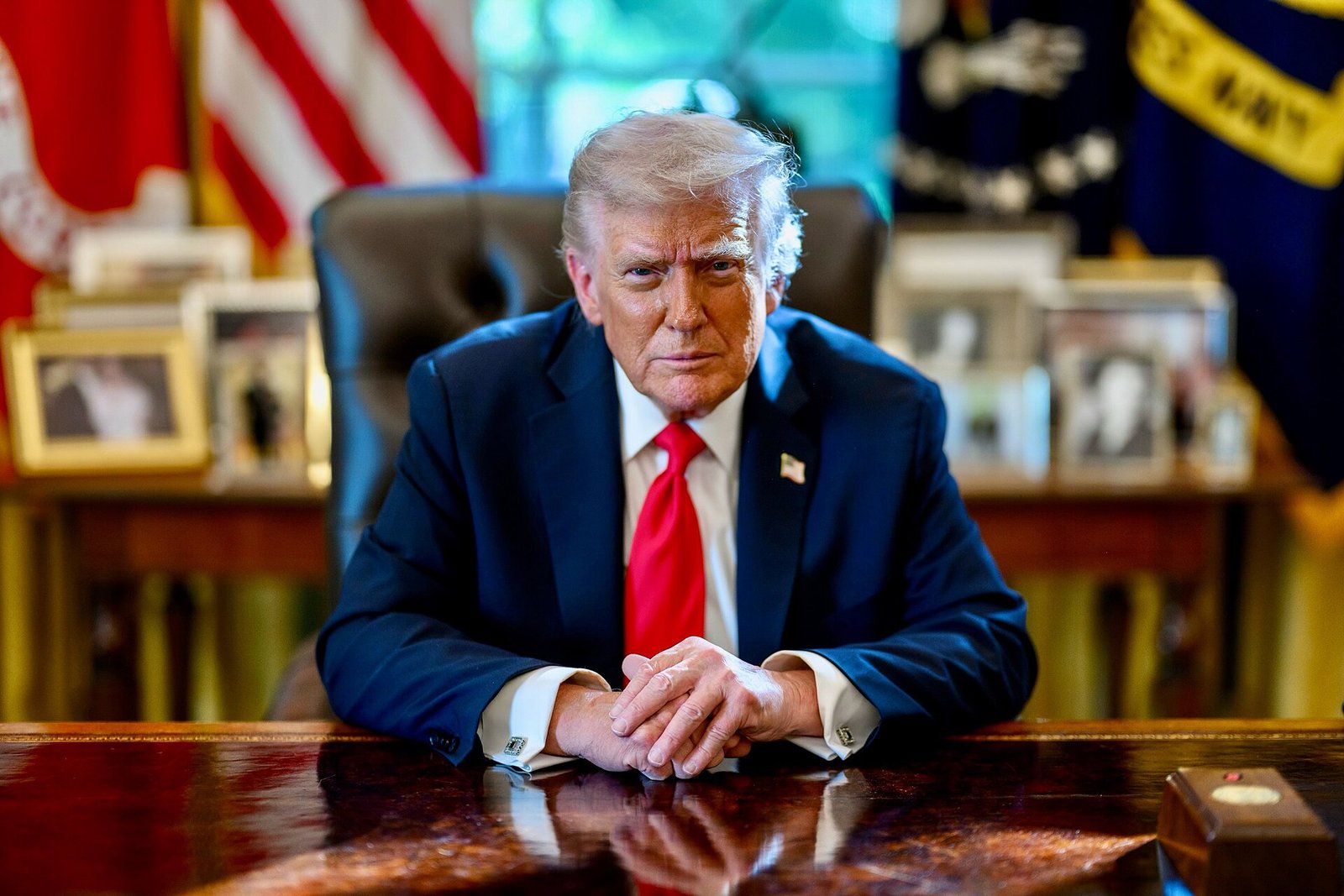
The U.S. government is paying for television advertisements featuring President Donald Trump five weeks before the midterm elections, triggering bipartisan criticism and legal scrutiny over whether taxpayer money can fund political messaging.
One 30-second advertisement shows photographs and video of Trump, campaign-style slogans, and footage of him vowing to defeat communism, socialism and Marxism in America, It also highlights tax cuts, manufacturing and support for police.
The spot uses JMSN’s “Love Me,” with a chorus repeatedly singing: “I’ll make them love me.”
Ultimate Fighting Championship president Dana White appears in the ad and praises the president.
Senate Majority Leader John Thune, a South Dakota Republican, told reporters Monday as he walked into the Capitol that he liked the ad’s message but opposes the funding source.
“It’s a great message. I like the message, but it shouldn’t be paid for by taxpayer dollars.”
Trump continues to campaign for Republican candidates as the government-funded advertisements air across broadcast and cable.
A second advertisement in the series, which ran over the weekend during “Fox News Sunday” and several NFL and college football games, closely resembles an online advertisement Trump did during his 2024 presidential campaign.
The earlier version urged supporters to text a number to support that campaign. AdImpact recorded the Sept. 23 spot on Fox News in Los Angeles and Newsmax in Chicago.
Public Citizen, Inc., a Washington, D.C.–based consumer-advocacy group, says the “Love Me” ad is airing in two media markets that include key midterm districts. The materials do not identify who bought the airtime, which agency produced the spots, or their total cost.
Sen. John Kennedy, a Louisiana Republican, addressed the spot Sunday on CBS’s “Face the Nation.”
“I don’t think any public official, including President Trump or Kristi Noem or John Kennedy, should spend public money on- on private ads for themselves,” he said
Four senior congressional Democrats demanded that the advertisement come down and that the White House account for the federal money used to produce and air ad’s campaign.
“If President Trump wants people to love him, he can pay for it himself,” The lawmakers wrote.
Senate Appropriations Vice Chair Patty Murray of Washington, House Appropriations ranking member Rosa DeLauro of Connecticut, Sen. Jack Reed of Rhode Island and Rep. Steny Hoyer of Maryland sent the letter to White House Chief of Staff Susie Wiles and copied OMB Director Russell Vought.
According to lawmakers the spot appeared to violate Section 718 of Division E of the Consolidated Appropriations Act, 2026, which bars appropriations from funding “publicity or propaganda purposes within the United States not heretofore authorized by Congress.”
Public Citizen separately argued 5 U.S.C. §3107, related appropriations laws, and the Hatch Act, 5 U.S.C. §7324, in a complaint filed Sept. 25.
“Even though Donald Trump is not a candidate himself, he has repeatedly hit the campaign trail pleading with his constituents to vote as if he were on the ballot.”
The organization now called for the Government Accountability Office and the Office of Special Counsel to investigate whether the advertisements violate restrictions on federally funded publicity and partisan activity.
In other words the body argues the Hatch Act does not apply to the president but does apply to White House staff, whom it argued conceived, produced and distributed the ad.
Common Cause, a Washington, D.C.-based watchdog and advocacy group, is now calling for the removal of the advertisement from all placements.
“Running political messaging stamped with ‘Paid for by the U.S. Government’ dangerously crosses the line from public service into authoritarian self-promotion,” Its president and CEO, Virginia Kase Solomón said.
In its Sept. 25 statement, the White House rejected the campaign-ad characterization and called the spots public service announcements intended to remind Americans why their country is worth loving and defending at home, at the border and abroad.
According to the administration, “Patriotism isn’t partisan.” the advertisements do not qualify as campaign ads because Trump is not on the ballot and the spots contain no call to action.
Trump administration cited earlier advertising by the George W. Bush, Obama and Biden administrations on Medicare, health-care enrollment and public health.
AdImpact reviewed more than 6,000 broadcast ads and over 5 million airings, as of June 30. The firm found Trump featured in 36% of all broadcast airings, with Republican advertisers featuring him in 44% of theirs and Democratic advertisers in 37%.
Those figures cover ads by candidates and political groups, not government-funded spots. AdImpact, in a June 11 projection, put total political advertising this cycle at a record $11.6 billion.