


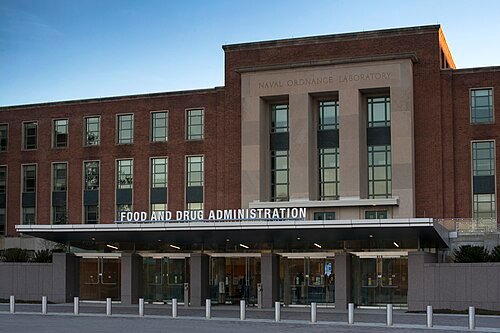
WASHINGTON, Relish Wire – Millions of people taking GLP-1 medicines for diabetes or weight loss will now see a new risk warning on the label.
The drugs, according to the U.S. Food and Drug Administration (FDA), may carry an increased risk of a rare eye condition that can take vision in one eye, suddenly and permanently.
In its announced demand, the FDA has now pushed a requirement for medicines like Ozempic, Rybelsus and Wegovy to include a warning about the potential risk in their product labeling, with other products including Mounjaro and Zepbound, Victoza and Saxenda, Trulicity, Xultophy, Soliqua and Foundayo.
The warning concerns non-arteritic anterior ischemic optic neuropathy, or NAION, a rare condition caused by reduced blood supply to the optic nerve. In some cases, some people lose central sharpness or even develop blind spots or tunnel vision and may sometimes see colours distorted.
The damage can be permanent, and having it in one eye raises the chance of it happening in the other.
The regulator body acted after spending more than a year investigating a safety signal first raised by researchers led by Hathaway in 2024, with cases of the eye condition subsequently reported across every currently marketed GLP-1 receptor agonist product
The research found a higher rate of NAION among people taking semaglutide at one medical centre. And it drew attention due to its uncommon condition.
But the FDA found limitations in the work and set out to check it in larger data.
In a bigger check, it pooled about 126 randomized trials with 134,253 patients. Among them, 78,217 had taken a GLP-1 drug and 56,036 had taken a placebo or another glucose-lowering medicine. The agency found 15 probable cases in total — 10 in GLP-1 users, five in placebo recipients, and none in patients on other diabetes drugs.
Put against time on treatment, the FDA analysis put the number at 6.4 cases per 100,000 patient years for GLP-1 users and 3.8 for comparators. In the general population over 50, totals put the yearly rate at 2.3 to 10.2 per 100,000 people.
Real-world records gave the FDA a less tidy answer.
In its Sentinel database, the regulators followed adults with type 2 diabetes who started treatment between 2019 and 2024. Against SGLT-2 inhibitors, another diabetes class, GLP-1 starters showed no statistically significant increase. Against DPP-4 inhibitors, they did — a hazard ratio of 1.43.
Outside the FDA, other studies also found a higher risk: in February this year a Veterans Affairs study in JAMA Ophthalmology found semaglutide starters at 2.33 times the risk of SGLT-2 starters — 0.29% against 0.13% over a median 2.1 years.
A PLOS Medicine meta-analysis, Separately, numbered the increase at roughly double, or about one extra case per 7,000 people treated for a year, with low certainty, and a 2025 analysis of 37.1 million people across 14 databases found a more modest increase than Hathaway’s original report.
Reports sent in after the drugs were on the market were difficult to interpret, the FDA said, with risk factors for NAION being diabetes, high blood pressure, smoking, sleep apnea, anemia and kidney disease. It pushed that conditions are common among people who take these drugs.
observational studies could be affected by other differences between patients and by cases being missed or wrongly recorded, the FDA added,
Hathaway and colleagues, meanwhile, have said further study was needed to assess causality.
The FDA’s answer to that uncertainty was a warning, not a withdrawal.
Patients are advised to contact a health care professional right away if they notice symptoms. Clinicians, meanwhile, are advised to promptly refer suspected cases to an ophthalmologist for evaluation and consider discontinuing the medicine in patients who develop NAION, unless the benefits clearly outweigh the risks.
The FDA action goes beyond what Europe did last year. In June that year, the European Medicines Agency’s safety committee called NAION a very rare side effect of the semaglutide products Ozempic, Rybelsus and Wegovy — up to one in 10,000 users — and said treatment should stop if it is confirmed.
The U.S. order covers the wider class, including Mounjaro and Zepbound. Their active ingredient, tirzepatide, also acts on a second hormone receptor, GIP. Byetta’s application was withdrawn for reasons unrelated to safety, and only generic exenatide remains marketed.
