
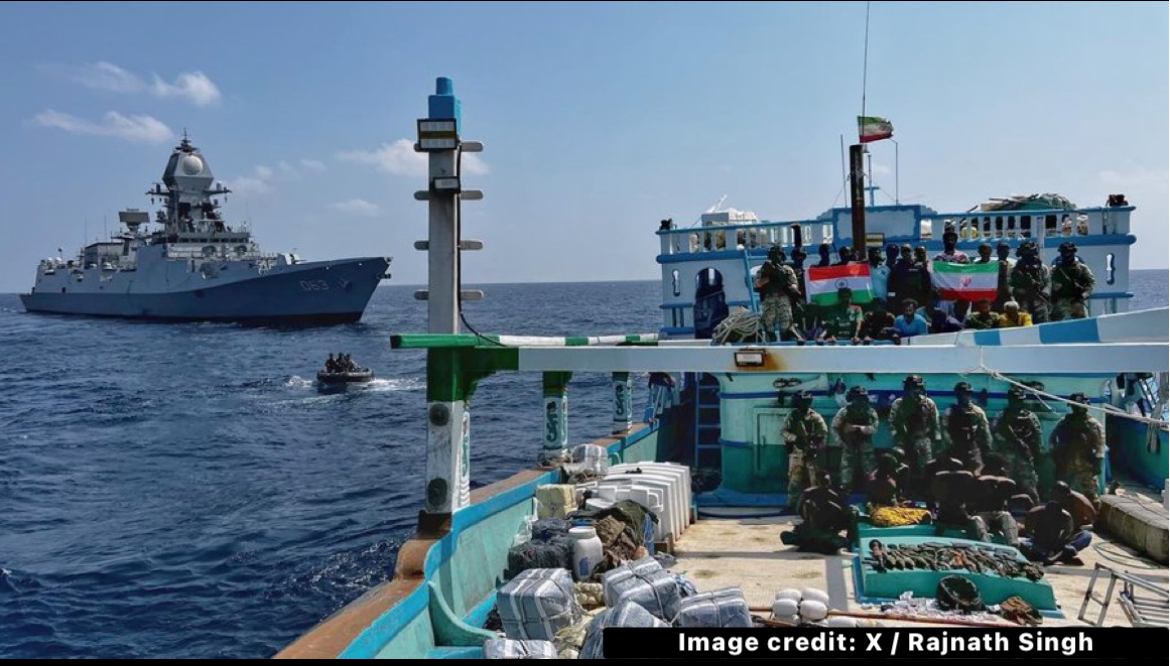
The Indian Navy has freed an Iranian fishing vessel from Somali pirates and rescued all 20 crew members aboard, without casualties or injuries, after an operation lasting more than 48 hours that ended on 2 November.
Azini, an Iranian-flagged fishing ship, was seized on 29 October between Bandar Bayla and Hafun, on the north-eastern coast of Somalia in Puntland, in which after the seizure, the vessel moved eastwards towards commercial shipping lanes.
India’s Ministry of Defence on Sunday said 20 Iranian crew members have now been recovered and released safely.
But an unnamed Puntland Maritime Police Force source cited by the Associated Press, who spoke on condition of anonymity, said the Azini, hijacked about 185 nautical miles (343 km) east of Bandar Bayla, was carrying 21 Iranian fishermen and two Somali security guards. He also put the number of pirates who seized the vessel at 12.
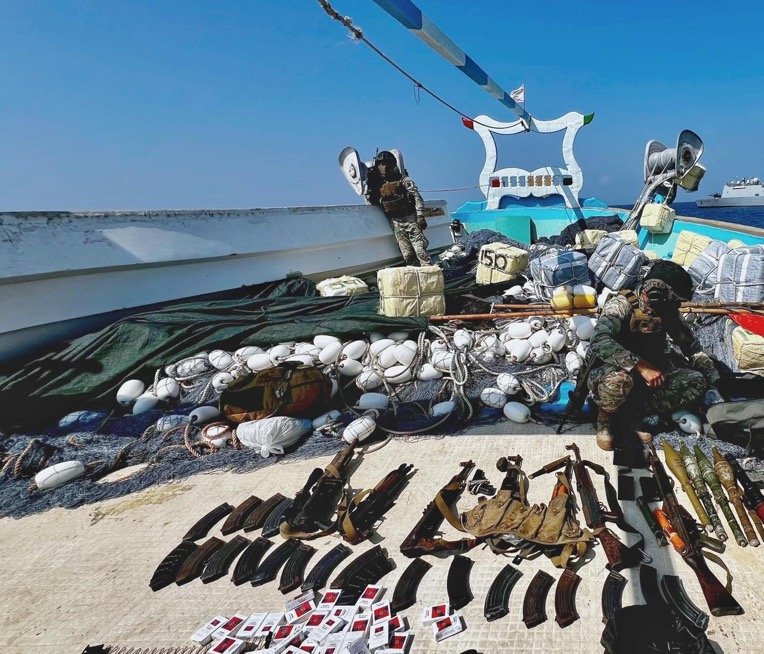
Indian forces disarmed the 12 suspected pirates, confiscated their phones, and released them rather than detaining them.
According to the unnamed official, AP source, the 12 suspected pirates and two Somali guards later arrived at Bandar Bayla after they had been released, which it said Three of the 14 people had minor injuries. But did not identify the injured or explain how they were hurt, while Indian officials reported no injuries occurred during the rescue in their statement.
“The Embassy of the Islamic Republic of Iran in New Delhi expresses its sincere appreciation to the Government of India,” the Iranian Embassy in New Delhi said in a statement.
“We highly commend the professionalism, courage and effective coordination demonstrated by the Indian Armed Forces, reflecting India’s strong commitment to Humanitarian Assistance and Disaster Relief (HADR) and its role in saving lives beyond borders,” the statement added.
In recent years, Somali piracy has resurged, most recently in 2026, with attacks on commercial shipping and fishing vessels rising after years of relative calm.
European Union Naval Force recorded about 25 incidents between January and mid-September this year, compared with nine last year, while at least six commercial vessels were hijacked since late April.
Among those hijackings was the tanker Honour 25, seized in April and held for months before Puntland forces retook it on 29 September, leaving five crew members dead.
The Sward, Eureka and Asana were also hijacked, with some crews held hostage for extended periods. At the peak, more than 60 seafarers were held across the affected vessels.
After the seizure, a central concern was raised. Indian authorities and the EU Maritime Security Centre – Indian Ocean worried the hijacking posed a high maritime security threat, which it pushed the seized vessel could be used as a “mother ship” to launch further attacks on merchant shipping.
An Indian warship which had already been deployed in the region was tasked to intervene, supported by a maritime reconnaissance aircraft.
Working together, the two platforms located the Azini after persistent surveillance, followed its movements and used calibrated non-kinetic measures to contain it and prevent it from escaping.
Marine Commandos were brought in by precision airdrop from an Indian Air Force C-17 transport aircraft. In a swift intervention, the Navy secured the vessel, overcame the pirates and freed the crew, more than 3,000 km from Mumbai in the Arabian Sea.
“Our brave personnel have once again demonstrated India’s ability, intent and resolve to safeguard lives, uphold maritime security and ensure stability across the Indian Ocean Region,” Indian Defence Minister Rajnath Singh said.
“India continues to stand resolute in ensuring SAFE SEAS and a free, open and secure Indian Ocean Region,” he added.