
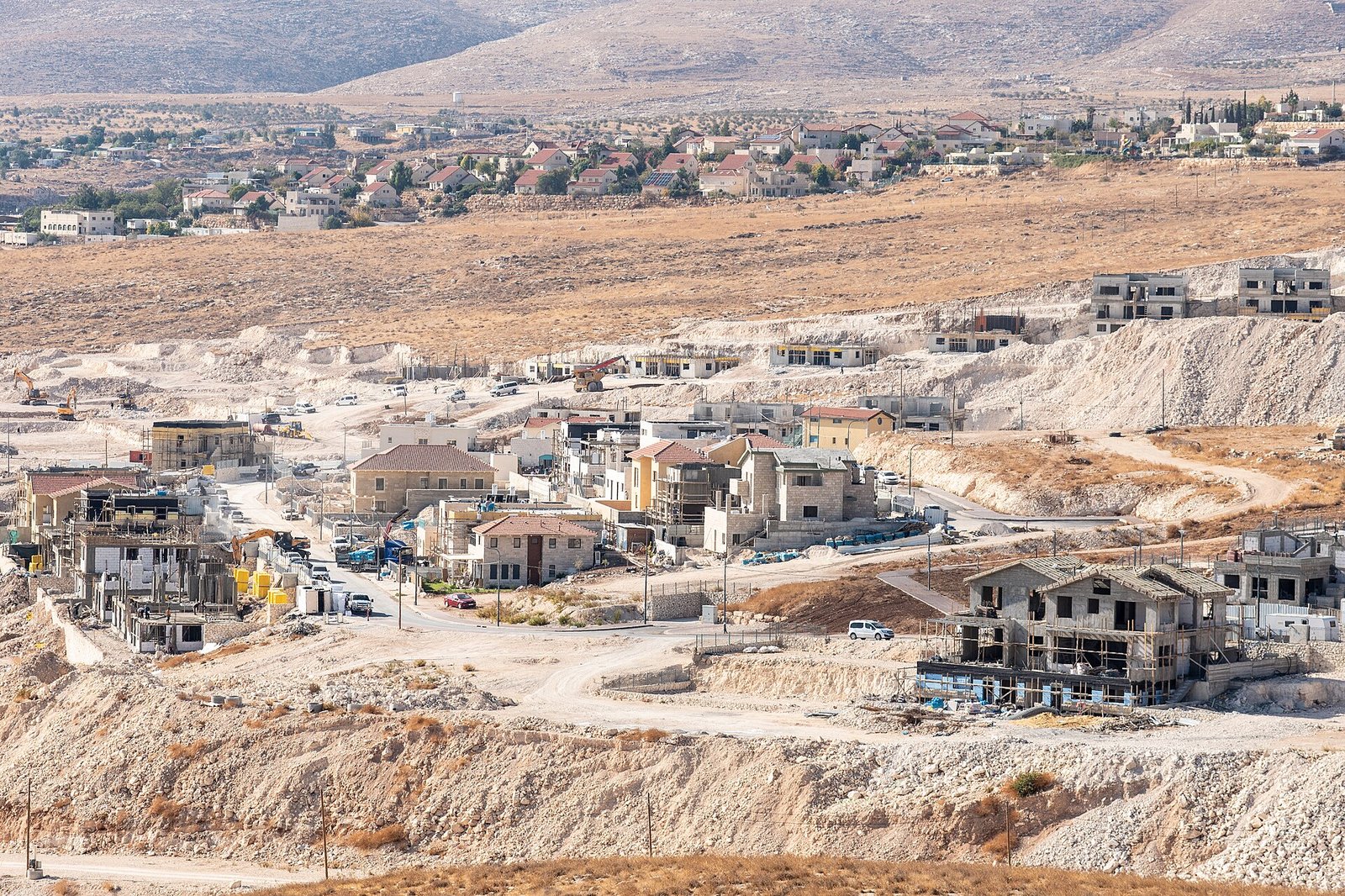
Britain will ban imports produced in Israeli settlements in the occupied Palestinian territories, Foreign Secretary Ed Miliband announced Tuesday, alongside a declaration that Israeli control of the West Bank is unlawful and a wider package targeting activity linked to expansion there.
The legislation is expected within six to nine months. Some measures will come sooner.
Tuesday’s declaration reaches well beyond imported goods.
Companies and individuals involved in construction, infrastructure, financing and real estate in settler communities will face measures under a new sanctions framework.
London will also prohibit advertising for illegal outposts in the country.
Britain changes its position
Ministers now consider the occupation unlawful. That conclusion was tied to Israel’s continuing hold on the territory, its intention to extend permanent sovereignty, and the growth of settler communities.
The policy is drawn along a specific boundary. Britain’s measures are aimed at the outposts and their growth. Normal trade with Israel, officials say, will continue. The minister also rejected the Boycott, Divestment and Sanctions campaign.
Arms exports face a new restriction
An arms-export measure has been added to the package.
More than 30 licences involving equipment used by the Israel Defense Forces in Gaza have already been suspended.
From now on, London will refuse applications for arms and other exports when they would materially contribute to Israeli control of the West Bank.
That restriction is meant to last as long as the control does.
Other parts of the response are moving ahead immediately: extra sanctions on extremist settlers, and an extension of the UK’s existing global human-rights sanctions regime so action over West Bank development — including E1 — can come faster.
The scale of settlement growth
London’s case rests in part on how much has changed since the Oslo peace process began.
Around 270,000 settlers were living in the occupied Palestinian territories in 1993. Today’s figure, in the statement, is about 770,000.
Approvals under the Netanyahu government have, he said, outpaced the previous twenty years in only four.
For Palestinian communities the statement describes demolitions, damaged infrastructure and displacement. Sixty-five communities have been completely expelled since 2023, and more than 4,000 Palestinians evicted, amid settler violence and state actions.
E1 is a particular point of concern. More than 1,200 homes were included in tenders issued in August. Construction there, the minister argued, would cut across the territorial relationship between East Jerusalem and the West Bank and undermine the possibility of a two-state solution.
Violence is another strand of the argument. United Nations figures cited in the statement put this year’s average at six violent settler attacks a day — the highest recorded level, in his description.
London has adopted the term “ethnic cleansing” for what it says is happening to Palestinians in parts of the West Bank, attributing that assessment to settler violence and to actions by Israeli authorities that, in Britain’s view, contributed to forced displacement.
Assessments from former Israeli Prime Minister Ehud Olmert and former Israeli health minister and retired IDF Brigadier General Ephraim Sneh were invoked in support of that characterization.
The package sat inside a broader statement on Israel and Palestine. Gaza took up a substantial share of it.
Britain’s own tally, presented in the statement, puts the Gaza death toll above 70,000, including at least 20,000 children. Nearly two million people were described as displaced, the population confined to about one-third of the territory.
Comments by Israeli Finance Minister Bezalel Smotrich about efforts to prevent a Palestinian state were offered as evidence of the gap Britain sees between a stated commitment to a two-state solution and developments on the ground.
Other governments join the move
Miliband grouped the Netherlands, Ireland, Belgium, Spain and Norway as countries already banning settlement goods or moving toward a ban, without saying which had done which. Denmark, Finland, Iceland, Poland, Portugal and Sweden have pledged support for further action, he said.
What happens next
Sanctions against certain settlers and the expanded human-rights measures are among the steps already moving.
He framed the package as an attempt to keep further West Bank development from closing off a two-state solution, said Britain would keep judging the Netanyahu government by its actions, and called for a different approach in Gaza and the occupied territories.