
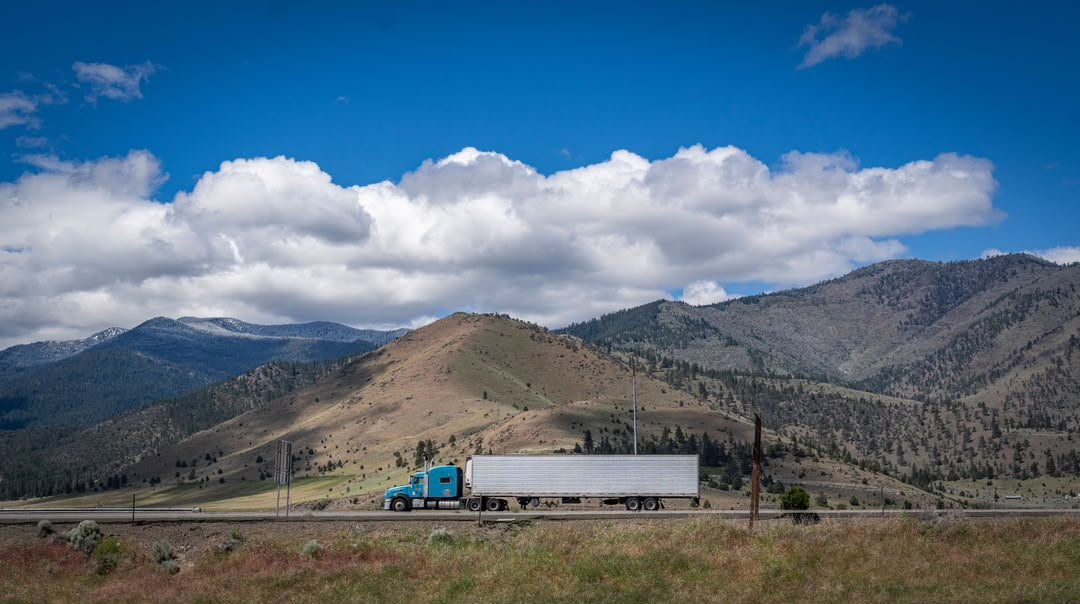
According to the U.S. Department of Transportation on Wednesday, it has granted Aurora Operations Inc., a five years exemption from federal truck-safety requirements, which now allows the company’s self-driving trucks to use a cab-mounted warning beacons instead of the roadside warning devices normally placed by a human driver.
Aurora Operations Inc, is a subsidiary of Aurora Innovation Inc.
Let’s Roll: More Miles. More Revenue Our self-driving Class-8 trucks haul freight on public roads today with no one behind the wheel—helping carriers and shippers run more efficient networks at lower cost. Learn More: https://t.co/vbvsag2Hj1 https://t.co/5QWxIKzaPH
— Aurora (@aurora_inno) September 18, 2026
This new exemption is more limited than what the government rejected two years ago, FMCSA said no to a wider request from Aurora and Waymo LLC. That request would have let any Level 4 company use other warning devices without telling the agency first and without clear monitoring rules.
Aurora then sued over that rejection, but in October last year the department granted a short three-month waiver and then kept extending it in three-month sequence — October 9 last year to January 8 this year, April, and July 9, (effective July 10 through October 9, 2026).
At @RoboPGH Robotics & AI Discovery Day: @NHTSAgov leadership team and the Pittsburgh Mayor stopped by our booth to see the Aurora Driver up close. Great conversation on the jobs the industry is creating and the impact that this technology will have on safety. https://t.co/c33FrpguD4
— Aurora (@aurora_inno) September 17, 2026
After that, Aurora dropped the lawsuit. A new request filed in April for a five-year exemption led to the new five-year exemption.
“decision underscores the government’s recognition of the immense economic and community benefits of autonomous trucking ,” the company said in a Statement
“High-visibility, cab-mounted warning beacons are a critical, 21st-century solution that enhances roadside safety by immediately alerting other road users without ever needing to put a person in harm’s way,” it added.
Federal rules used to require a driver to stop on a roadway, and leave the cab to place warning devices behind the vehicle. The exemption addresses a direct conflict between existing safety rules and driverless operation.
The company’s Level 4 trucks with its current version have no driver in the driver’s seat and can operate without anyone aboard, while the company monitors the fleet from the office, so the conventional procedure cannot be performed in the usual way.
Under old rules, If a truck stops within 500 feet of a curve, hilltop, or anything blocking the view, its warning device must be placed as far as 500 feet away so approaching drivers can see it. Under the new exemption for Aurora, the truck can use a cab-mounted flashing amber beacon instead.
The department said the alternative would likely provide a level of safety equivalent to or greater than the current system and serves the public interest.
That conclusion drew on evidence Aurora submitted about how motorists respond to beacons compared to triangles, including data that was not uniformly favorable.
A limits still apply to the truck. They cannot carry passengers or hazardous materials. They cannot use setups that need a special license, like tank trucks and double or triple trailers.
A brightness standard must be met by the beacon, it must have a backup power, so one failure does not shut them off.
The agency said it weighed a naturalistic study showing lower response rates in some scenarios but found the difference immaterial at straight-road locations, which matters because the exemption is limited primarily to the Interstate Highway System, where standardized geometry makes a fixed beacon more visible.
The framework is not limited to Aurora in practice. Kodiak Robotics Inc. and Waabi Logistics Inc. have notified regulators that they are operating under the same terms, which shows the exemption functions as a shared path for qualifying carriers that meet the conditions.
Those companpanies previous rejections was under the Biden administration, after Derek Barrs was confirmed to lead FMCSA.
A different case is still live: Illinois cargo-van operator Kostas Giannoulias petitioned the Seventh Circuit in September 2026 to review the July 2026 waiver, arguing serial three-month waivers are being used to avoid the exemption process.