

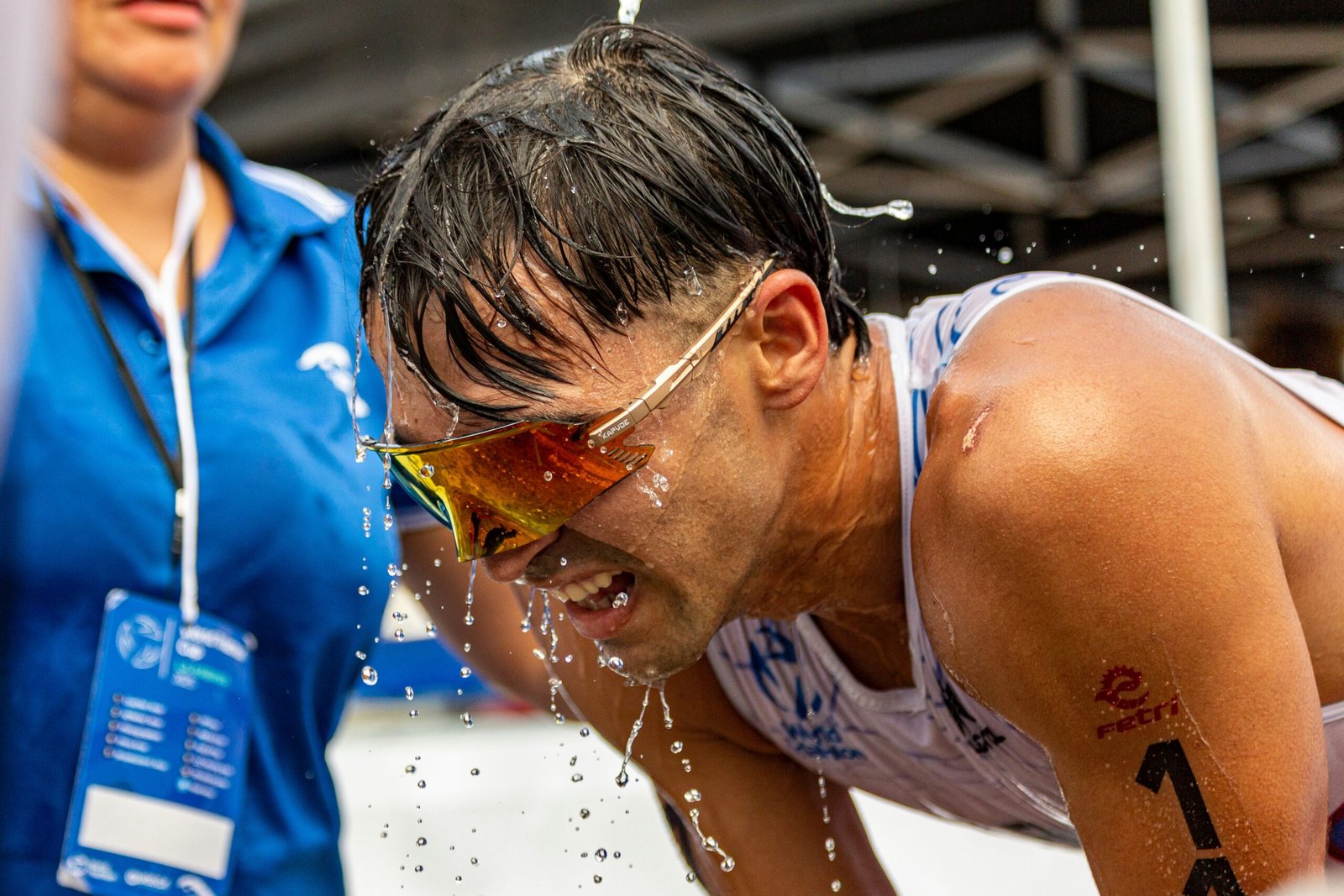
In recent years, extreme heat has become one of the biggest problems modern sport has been facing. Athletes, organizers and even cities will need to adapt as temperatures continue to rise.
Reuters recently reported that NWS meteorologist Jennifer Dunn cited how asphalt and concrete absorb sunlight throughout the day and later releases that massive stored heat back toward pedestrians. This was said to push the temperature people actually feel to well above what is shown on the forecast.
This is not a one street corner problem.
A heat-mapping study of Dallas by climate analysts CAPA Strategies also found ground temperatures swinging by as much as 10 degrees Fahrenheit ((5.6°C)”.
Those numbers is reported to depend on what is nearby. Parking lots and industrial zones mostly trap the most heat, while tree-lined residential blocks and green spaces stay cooler and more chill.”
Over the years heat has long became a threat at sporting events.
A review of medical research tied a total number of 46 heat stroke deaths in American football to the years 1995 through 2010 alone.
Fatalities later dropped after the NCAA acted and introduced heat acclimatization rules for college athletes in 2003.
Researchers have previously emphasized that prevention works better when programs recognize warning signs early.
In recent years the danger has extended way beyond the field.
In a larger review of 40 studies on several sporting events from 2010 to 2023, researchers found that rising global temperatures do not just threaten athletes, but also impact officials, volunteers, and spectators.
The takeaway is clear: organizers must build comprehensive heat policies that cover everyone at an event, not just competitors.”
Dallas itself has already seen the human cost.
An estimated 112 residents had previously died from heat-related causes in the summer of 2011. A separate Urban Climate study mapped the city’s most heat-vulnerable neighborhoods to understand why.”
What is being done and not done.
Engineering can help.
Instead of trying to cool an entire venue, targeting cooling systems directly at occupied seating sections delivers more comfort, higher efficiency, and lower costs.”
Qatar’s 2022 World Cup offered a real-world test case. Greening projects around venues like Education City and Khalifa International Stadium measurably lowered surface temperatures, extending cooling effects up to 200 meters from the new vegetation.”
Researchers have said that the model could guide future hosts, including Saudi Arabia ahead of its 2034 tournament.”
Materials are said to matter a lot too.
Studies comparing pavement types found that asphalt absorbs and releases more heat than concrete. This suggests that swapping surfaces and adding tree cover near stadiums and public plazas will likely mitigate heat risks.
Dallas matches are played indoors; this spares fans the worst heat once inside. But the real problem is the long walk from the parking lots to the stadium, which remains a heat gauntlet.”
One Argentine fan told Reuters that while staying still can mask the heat, standing in the city’s heavy concrete landscape makes the brutal temperature entirely apparent.”
Wearing loose, light-colored clothing, taking frequent breaks, and utilizing water, cooling towels, or misters,” the NWS advised, “noting that heat impacts can hit within minutes of someone feeling fine.”
As the global temperatures climb, more tournaments will likely to face the same reckoning Dallas is facing now.