Spain reimposed border controls on air and sea arrivals from Italy at midnight on August 8, retaliating after Rome refused to lift its own checks on travelers from Spain, which Italy imposed following the mass crossings into the Spanish enclave of Ceuta from Morocco.
Interior Minister Fernando Grande-Marlaska signed the order on August 7, formalizing Spain’s decision to reinstate the border controls.
The order invokes Article 25 of the Schengen Borders Code, which allows temporary internal border controls when a member state faces a serious threat to public order or internal security.
Madrid’s justification: pressure from migration along the Central Mediterranean route, and worry over migrants moving freely inside the Schengen zone.
The checks hit passenger flights whose last stop before Spain was Italian soil. Same for ferries and other passenger vessels, if the last port of call was Italy, the check applies.
RTVE reported the checks opened at Madrid-Barajas and Barcelona-El Prat, then spread through the day to several more airports, plus the Balearic and Canary Islands.
Spanish police checked 199 third-country travelers on 12 flights on the first day, RTVE reported, citing the Interior Ministry, which said the checks were random rather than systematic and focused mainly on non-EU nationals.
One passenger, identified by RTVE only as Elisa, said she had to show her papers before stepping off the plane, she wasn’t used to document checks inside the EU, she said.
Italy moved first.
The European Commission confirmed it, Italy reintroduced checks at its internal air and sea borders with Spain, running August 1 through September 1.
The stated reason: “large-scale irregular entries of third-country nationals” tied to Ceuta. Rome’s other worry, on the record: migrants moving freely across the Schengen area once inside.
Prime Minister Giorgia Meloni laid out her reasoning on X on July 30. The images out of Ceuta, she wrote, showed uncontrolled illegal immigration threatening European border security.
Le immagini che arrivano da Ceuta sono impressionanti e dimostrano, ancora una volta, che l’immigrazione clandestina fuori controllo rappresenta una minaccia concreta per la sicurezza dei confini europei.
— Giorgia Meloni (@GiorgiaMeloni) July 30, 2026
Mi sono confrontata con il Ministro dell’Interno Matteo Piantedosi.…
Italy stood ready for “extraordinary measures,” she said, a possible Schengen suspension with Spain among them.
Il Governo ha deciso di sospendere temporaneamente il regime di libera circolazione previsto da Schengen nei collegamenti marittimi e aerei con la Spagna, reintroducendo i controlli di frontiera.
— Giorgia Meloni (@GiorgiaMeloni) July 31, 2026
Si tratta di una misura straordinaria, adottata per tutelare la sicurezza nazionale… pic.twitter.com/bpszoG8soX
Spain gave Italy a deadline: lift the controls by Sunday, August 9, or face “proportional” measures. RTVE reported the warning.
Rome refused.
Palazzo Chigi laid out its position on August 7: Italy “does not accept ultimatums or impositions” on matters of national security and border control.
The controls stand at least until August 15, Palazzo Chigi made it clear, and beyond that, until “security and terrorism risks for Italy have been completely excluded.”
Chigi further pointed to Spain’s own warning: Spanish authorities had flagged another wave of migration toward Ceuta expected around that date.
Spanish and EU citizens, notably, were exempt from the additional checks.
Spain answered the same day, imposing its own controls on arrivals from Italy. Grande-Marlaska formally notified senior officials at the European Commission and Parliament of Madrid’s decision.
The dispute traces back to the mass crossings into Ceuta on July 30 and 31.
How many people actually crossed is still contested.
Ceuta’s Mayor-President, Juan Jesús Vivas, told the European Parliament’s LIBE committee that 78,000 to 80,000 people entered the enclave, an “irreparable tragedy,” he called it, in which more than 100 people died, he said.
EU Migration Commissioner Magnus Brunner gave a different count: more than 70,000 people crossed “in a matter of hours,” with a death toll of 75.
A separate report, citing Morocco’s Interior Ministry, put the number far lower, about 40,000 into Ceuta and roughly 1,000 more into Melilla.
In a biweekly report covering January through July, Spain’s Interior Ministry stated that its published figures exclude July 30 and 31 entirely, noting that those dates “require a specific analysis.”
Spain’s Foreign Ministry stated the group that crossed on July 30 has “already been returned to Morocco.”
La práctica totalidad de quienes entraron en Ceuta han vuelto ya a Marruecos.
— José Manuel Albares (@jmalbares) July 31, 2026
No es posible trasladarse de Ceuta y Melilla a la Peninsula sin identificarse en un control de policía. La integridad del espacio Schengen está absolutamente garantizada. Basta de confusión interesada
Brunner backed that up: Spain confirmed practically everyone who entered Ceuta went back, no one reached mainland Spain.
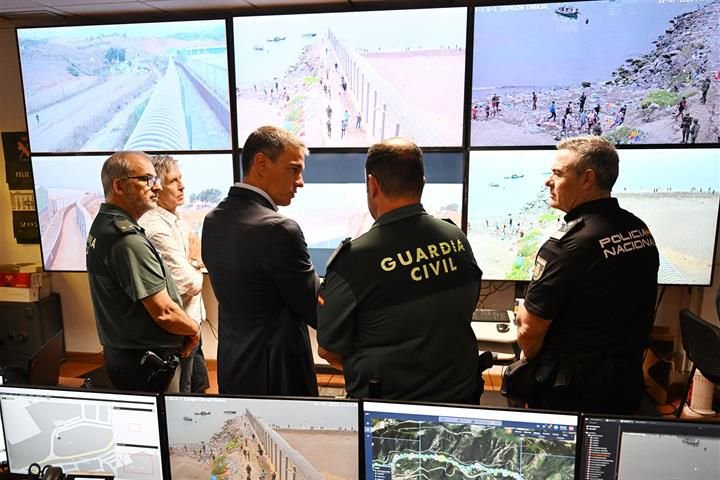
Prime Minister Pedro Sánchez traveled to Ceuta on July 31 and described the mass crossings as “an attack, a violation of Spain’s territorial integrity.”
He announced additional security deployment, a new buoy barrier at the Tarajal breakwater to speed returns, and accelerated deportation processing.
A Supreme Court ruling sits at the center of this too.
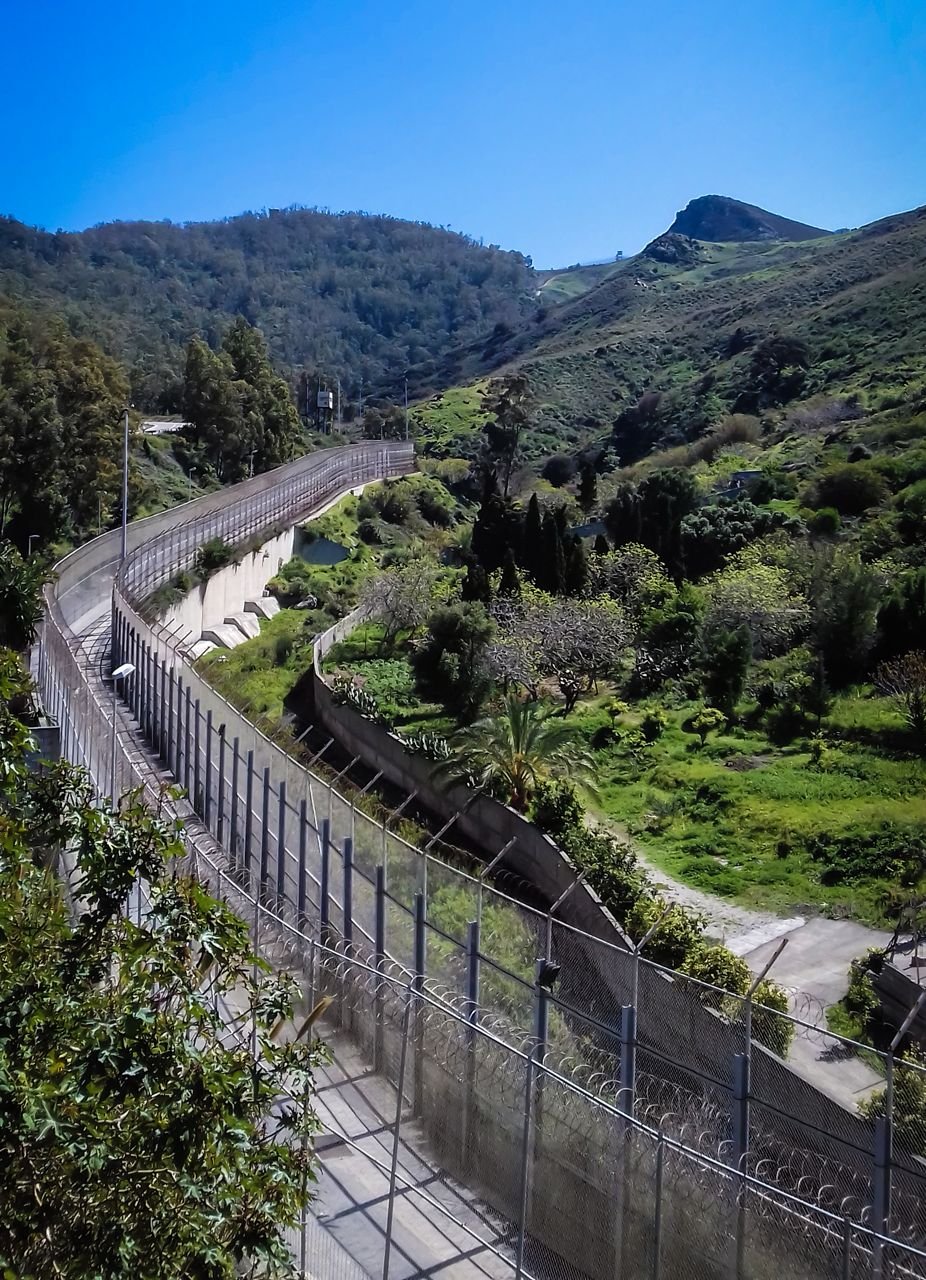
The ruling found that Spain’s summary “hot return” procedure did not apply to migrants intercepted at sea while attempting to reach Ceuta or Melilla because they had not crossed a physical border-containment element, such as a fence.
Sánchez later pinned part of the blame on that ruling. Trafficking networks, he said, exploited what he called a “self-serving interpretation” of it.
A Moroccan government source, in a briefing carried by state news agency MAP, said the ruling “simply granted immunity to illegal entry by sea.”
That same source accused Spanish authorities of failing to warn Rabat that the decision would weaken deterrence.
Spain’s Foreign Ministry rejected the framing outright. The ruling “does not modify the Foreigners’ Law,” it said, and opens no new entry route, nor does it block returns.
Twenty-three EU heads of state and government put it in writing.
Their joint letter, dated August 1, went to European Council President António Costa and Commission President Ursula von der Leyen. The Supreme Court ruling, they wrote, had been “used to fuel” the crisis.
Their demand: an emergency meeting of interior ministers.
Finnish Interior Minister Mari Rantanen went further on X. Spain, she wrote, had “completely failed” to protect the bloc’s external border, and she backed calls to exclude Spain from Schengen.
Denmark and the Czech Republic weren’t far behind. i24NEWS reported their leaders made similar calls, to consider suspending Spain’s participation outright.
Brunner struck a different note. After an informal meeting of EU interior ministers, he said there was “full solidarity” with Spain, and that the Schengen area itself remained unaffected.
The Commission’s offer on the table: financial and operational support, Frontex assistance included.
As of August 9, both countries’ controls remain in force
Spain’s temporary border controls are set to expire automatically at midnight on 7 September, unless they are lifted earlier or formally extended.
The European Commission’s notification lists Italy’s controls through September 1. Palazzo Chigi, however, stated on August 7 that Italy would not reconsider the measure before August 15.
Brunner said on August 8 that both the Spanish and Italian interior ministers had confirmed to him directly that the controls were temporary. Trust between member states, he said, “is our most valuable currency.”